Christian Valentine Png, Loved Png: An Embroidery Review
As a designer who spends more time behind an embroidery hoop than a computer screen, I approach every new graphic asset with a healthy dose of skepticism. When evaluating the Christian Valentine Png, Loved Png for potential use in my studio, my first question is never about how pretty it looks on a monitor. Instead, I ask whether this artwork can survive the translation from pixels to thread. This specific digital download, provided as a high-quality 300 DPI PNG, presents a unique opportunity and a distinct challenge for makers. It captures a tender, faith-based sentiment perfect for the season, but because it arrives strictly as a raster image without vector or pre-digitized embroidery files, it requires a deliberate workflow to ensure your finished product meets professional standards.
First Impressions: Mood and Visual Weight
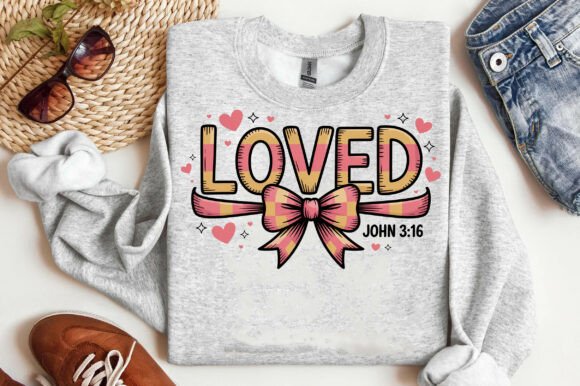
Upon opening the file, the immediate impression is one of softness and intentionality. The "Loved" theme resonates deeply within the Christian Valentine niche, moving away from commercial clichés toward something more enduring and spiritual. For those of us creating personalized gifts or boutique inventory, this emotional weight is crucial. Customers aren't just buying a shirt; they are buying a feeling of being cherished by God. The typography and illustrative elements in this PNG appear balanced, suggesting a design that wants to be centered and prominent rather than tucked away as a subtle accent.
However, viewing this through an embroiderer's lens, I immediately assess the negative space and line integrity. A 300 DPI resolution is excellent for printing, but for digitizing, clarity is king. The edges in this file are crisp enough to trace, which is vital if you plan to convert this into an applique design or a complex multi-color stitch pattern. The visual personality feels best suited for items that offer a flat, stable canvas. While it is categorized under T-Shirt Designs and Graphics, my instinct tells me this artwork would shine equally well on woven goods where the message can be read clearly without the distortion that sometimes plagues stretchy knits.
Real-World Application: The Sweatshirt Test
To truly evaluate the Christian Valentine Png, Loved Png, I mentally placed it onto a current project: a custom embroidered sweatshirt intended for a church women’s retreat. Sweatshirts are a staple for Etsy sellers and small shop products, but fleece fabrics are unforgiving. In this scenario, the design serves as a centerpiece. Because the PNG lacks pre-defined stitch paths, I had to consider how to interpret the art manually.
For this sweatshirt application, I envisioned using a combination of techniques. The larger solid areas of the design would benefit from a light fill stitch or, better yet, an appliqué foundation to reduce bulk and prevent the garment from becoming stiff. The script elements, likely representing the "Loved" text, would require a smooth satin stitch. Here is where the high resolution of the source file pays off; when zooming in to set anchor points during digitizing, the curves remain defined rather than pixelated. This clarity allows for cleaner column widths and fewer jagged edges in the final stitch out. If you are running a craft business, this level of detail translates directly to customer trust. Buyers can tell the difference between a rushed auto-digitize job and a thoughtfully interpreted design.
Navigating Fabric Limitations and Hoop Constraints
While the design is versatile, practical experience dictates caution in certain applications. As a raster-only asset, resizing requires care. Unlike vectors, stretching a PNG too far before digitizing can introduce artifacts that your software might mistakenly interpret as stitch details. I strongly advise against using this design on highly textured fabrics like terry cloth or boucle unless you simplify the elements significantly. The intricate details implied by the "Christian Valentine" aesthetic could get lost in the pile, resulting in a muddy appearance.
Furthermore, consider your hoop size limitations. If you intend to use this on baby clothes or caps, you must verify that the design retains its legibility at smaller scales. Tiny lettering often fails in embroidery if the columns become narrower than the thread itself. For curved surfaces like caps, the horizontal span of the design matters. A wide layout might distort around the brim curve, so you may need to separate the PNG elements and rearrange them specifically for headwear. Always test on scrap fabric that matches your production material. What works on a stable cotton tote bag might pull and pucker on a lightweight jersey knit. Using the correct stabilizer is non-negotiable here; a cut-away stabilizer is usually safest for apparel to support the stitch density over time.
Commercial Viability and Product Value
For creative entrepreneurs and digital product sellers, understanding the commercial potential of this asset is key. Since this is a PNG-only download, it offers dual utility. You can use it to create stunning printable mockups for your listings before you even stitch a single sample. This is invaluable for validating market interest. However, for physical commercial embroidery, the value lies in your interpretation. You cannot simply resell the PNG as an embroidery file, nor should you rely on automated conversion tools if you want to charge premium prices.
The "Loved" concept has high giftability. It fits perfectly into niches like wedding gifts, nursery decor, and holiday merchandise. When listing finished products derived from this design, emphasize the handmade nature of the translation from art to thread. Customers appreciate knowing that a human eye reviewed the stitch density and selected thread colors to match the original artwork's mood. This attention to detail separates professional makers from hobbyists. Additionally, always double-check your licensing rights. Ensure you have permission to sell physical items made from this design, especially if you are operating a high-volume Etsy shop or boutique.
Essential Designer Notes for Success
Before you load this design into your software or machine, keep these practical checkpoints in mind to ensure a professional outcome:
- Verify Resolution Before Digitizing: Although listed as 300 DPI, always check the actual pixel dimensions. Ensure the image is large enough for your intended hoop size without upscaling, which degrades quality.
- Contrast Testing: View the PNG in grayscale and invert the colors. This reveals hidden shading issues that might affect thread color selection on dark versus light fabrics.
- Stitch Type Planning: Decide early if you will use appliqué, satin, or fill stitches. The PNG provides the map, but you must choose the vehicle. Complex gradients in the image may need to be simplified into solid thread regions.
- Mockup vs. Reality: Use the high-quality PNG for digital previews, but never assume the stitch-out will look identical. Thread has sheen and texture that ink does not. Adjust expectations accordingly.
- Licensing Compliance: Confirm whether the license covers both personal use and commercial sale of finished goods. Documentation protects your business.
- Test Stitch Out: Never skip this step. Run a test on similar fabric to check for registration issues, especially where text meets graphical elements. Adjust pull compensation based on the results.
The Christian Valentine Png, Loved Png is a beautiful starting point for meaningful projects. It carries the right sentiment for the season and offers enough visual interest to create standout merchandise. However, its success depends entirely on the maker's willingness to treat it as raw material rather than a finished solution. By respecting the technical requirements of embroidery and leveraging the high-resolution source file intelligently, you can transform this digital graphic into a tangible expression of faith and love that customers will treasure. Whether you are stitching a single gift for a friend or fulfilling orders for your online shop, let practical judgment guide your needle.